A portable power station on a wooden sideboard in a bright modern home, charging a laptop and a phone

Power wherever you need it.

Explore portable power stations for home backup, travel, camping and everyday energy independence from leading brands including EcoFlow, BLUETTI and Jackery.

Horizon Living Group explains portable power in plain English and publishes independent buying guides and reviews, so you can research at your own pace before you buy.

What is a portable power station?

Portable power, explained.

A portable power station combines a rechargeable battery, power electronics and a range of outputs in a single transportable unit. Charge it from the mains, a vehicle or compatible solar panels, then use that stored electricity wherever you need it.

It is not a like for like replacement for mains electricity. What any unit can run, and for how long, varies significantly according to its battery capacity, its output power and the equipment you connect to it.

Common uses

  • Home backup for selected devices during a power cut
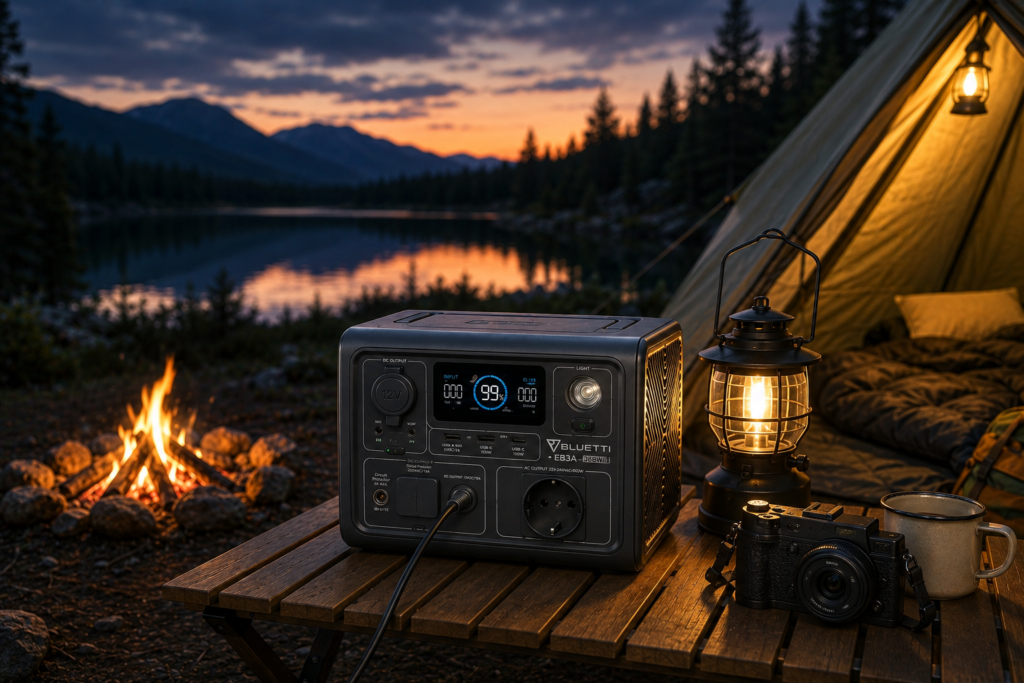
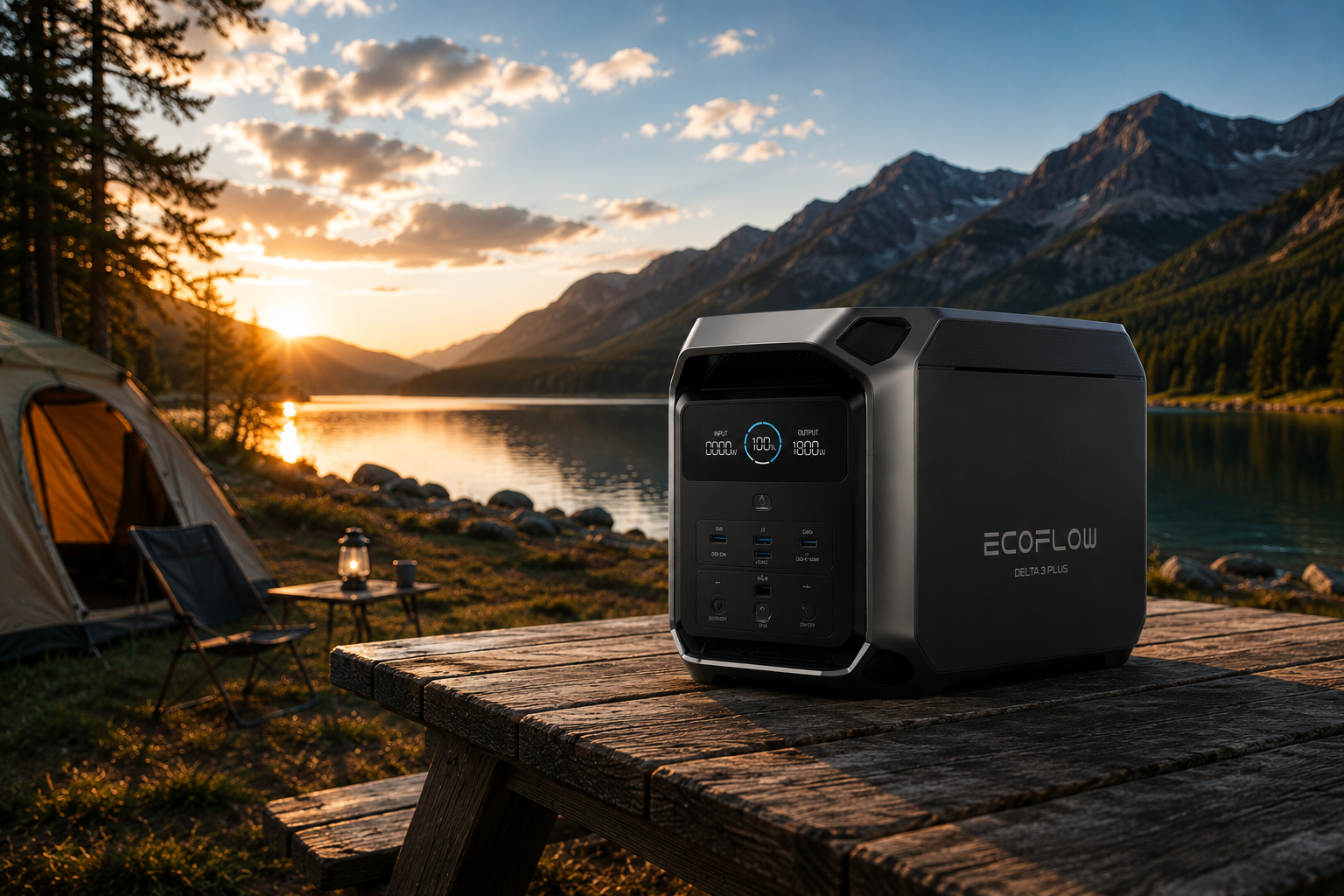
  • Camping and touring trips off grid
  • Caravan and motorhome use
  • Outdoor work and DIY away from mains sockets
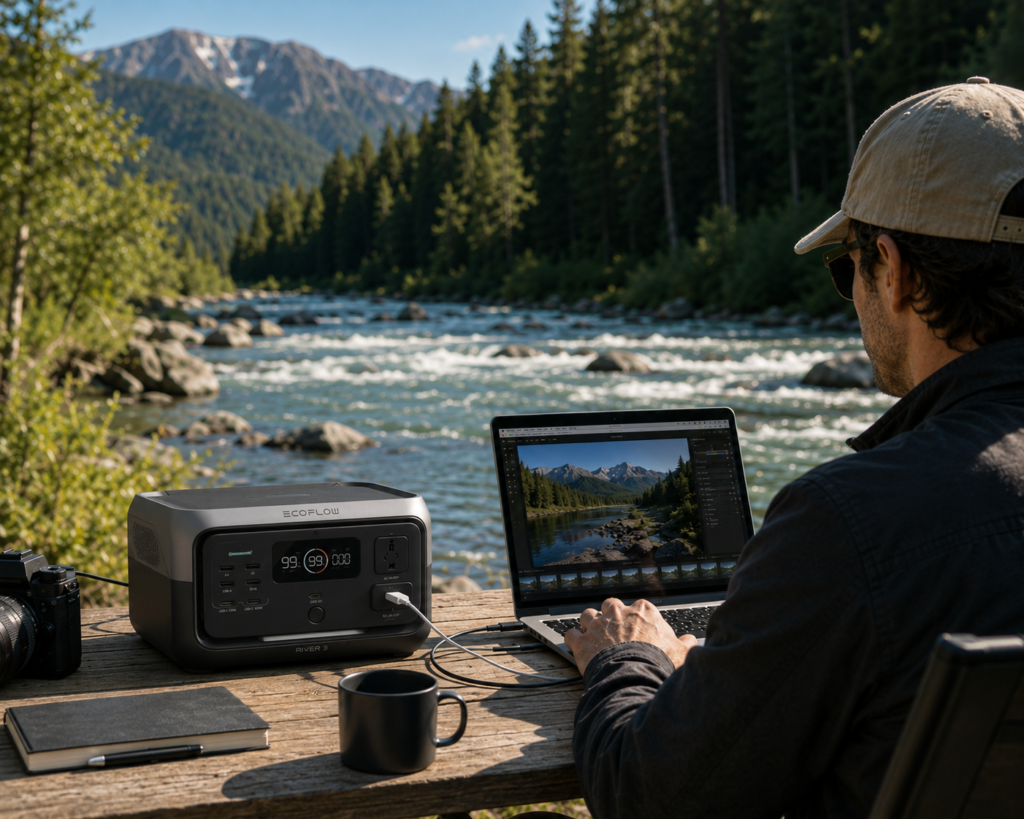
  • Charging phones, laptops, cameras and other electronics
  • Running compatible appliances within the unit's output limits
  • Emergency power for essential equipment
  • Solar charging with compatible portable panels

Choose by use

What do you need to power?

The right portable power station depends less on the brand and more on what you actually want to run. Start with your use, then match capacity and output to it.

Everyday portable power

For phones, laptops, cameras, lighting and smaller devices, at home or on the move.

Camping and travel

For off grid trips, camping equipment and mobile electronics where mains power is not available.

Larger appliances

For users requiring greater output and capacity to run more demanding compatible equipment.

Home backup

For selected essential appliances and devices during interruptions to mains electricity.

Expandable energy systems

For users considering larger modular systems with additional batteries or compatible solar charging.

Leading portable power brands

Explore leading portable power brands

Three names come up again and again in UK portable power. Our reviews and buying guides look at what each brand offers, so you can compare them on the things that matter to you.

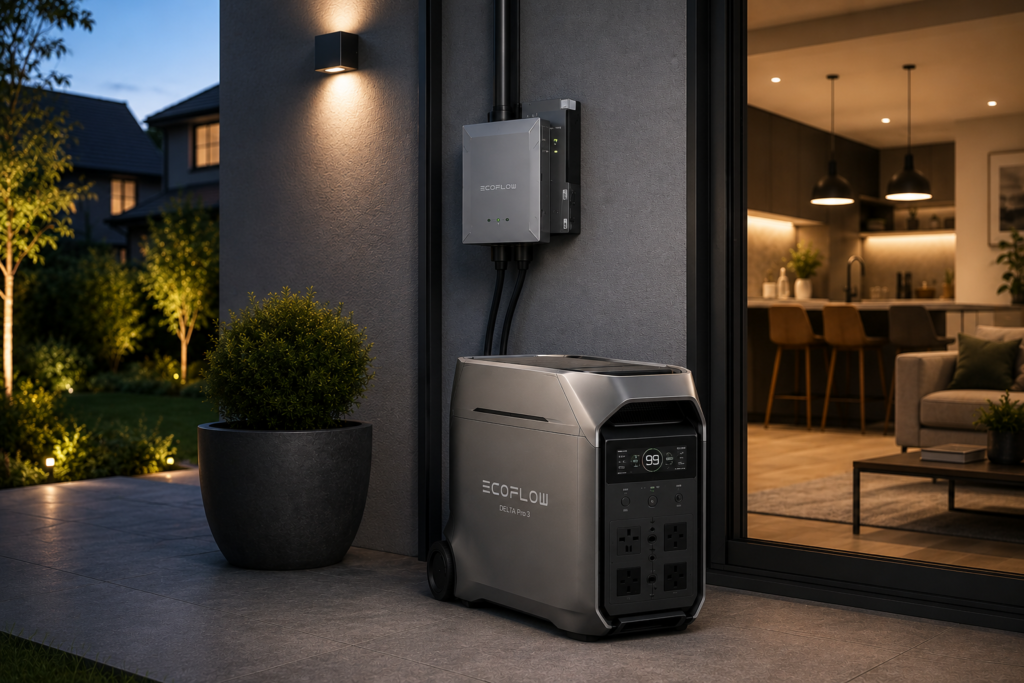
An EcoFlow Delta Pro 3 portable power station

EcoFlow

EcoFlow offers a broad range of portable power stations, expandable battery systems and compatible solar products, from compact units for travel through to higher capacity systems aimed at home backup.

Explore EcoFlow

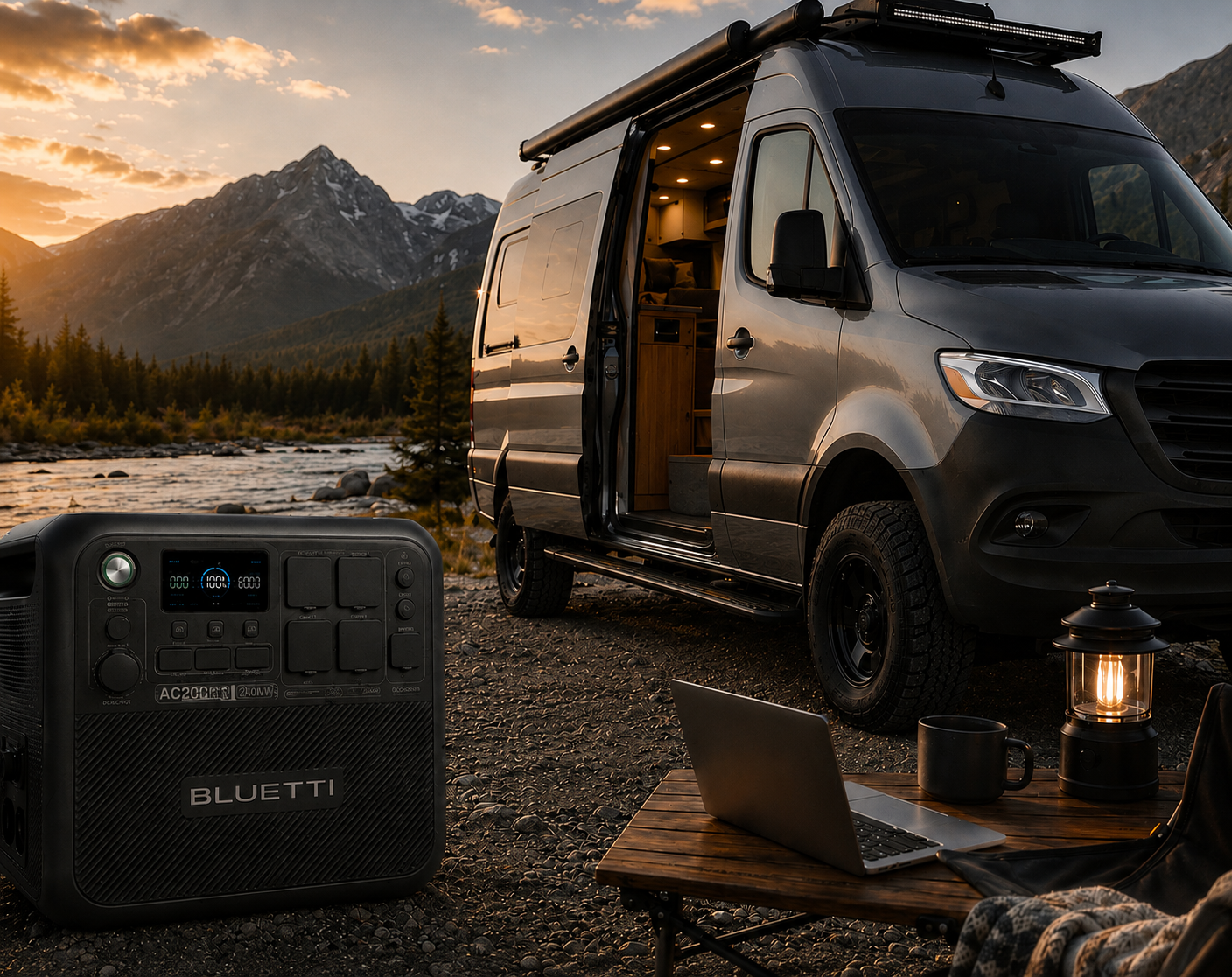
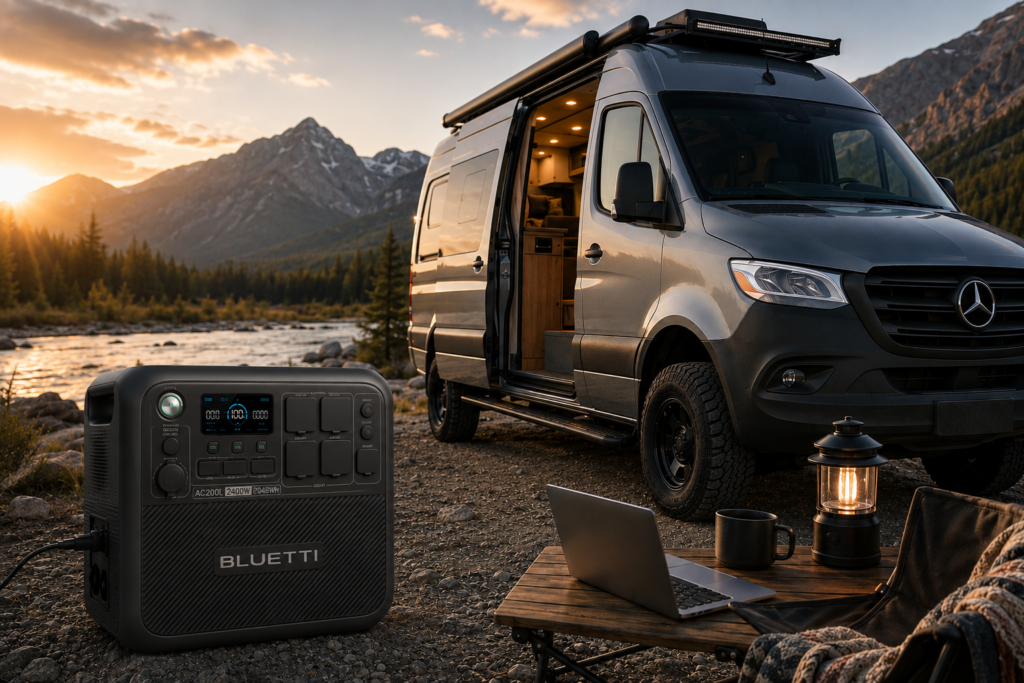
BLUETTI

BLUETTI offers portable and expandable battery power products across a range of capacities, covering uses from camping and travel through to backup power at home.

Explore BLUETTI
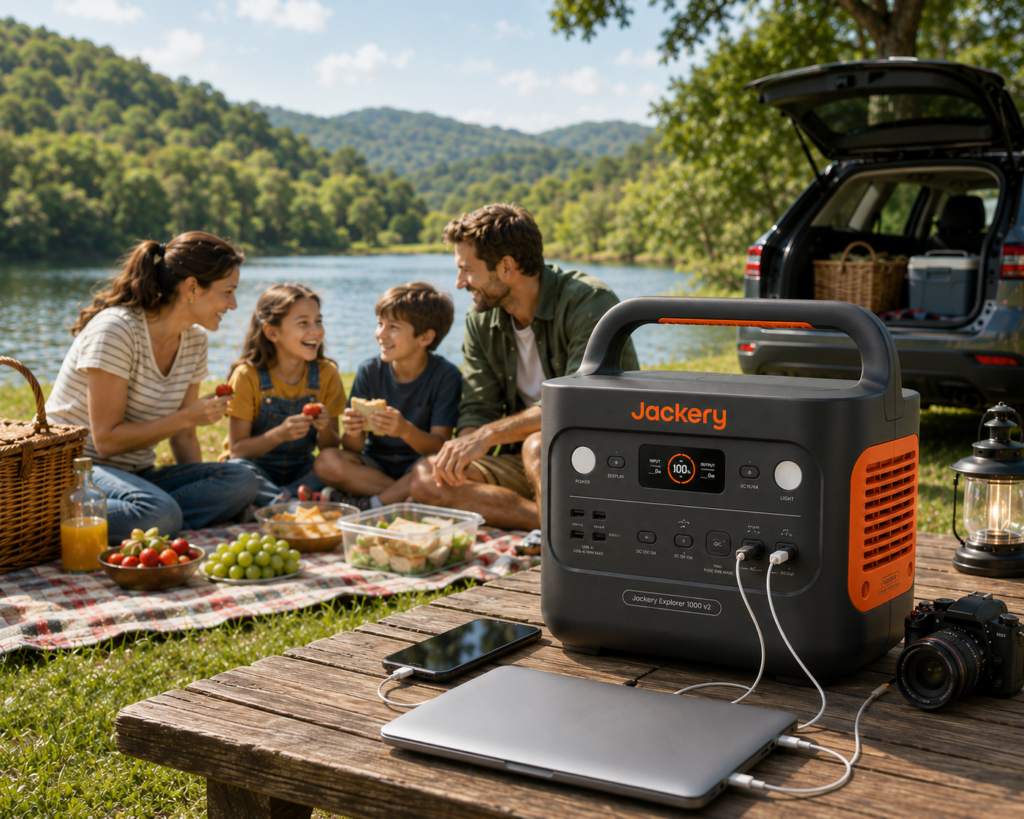
A Jackery portable power station

Jackery

Jackery offers portable power stations and compatible solar charging products aimed at uses including travel, camping and backup power for selected devices.

Explore Jackery

Affiliate disclosure

Some links in our portable power guides may be affiliate links. If you buy through one of these links, Horizon Living may receive a commission at no additional cost to you. This does not affect the price you pay. Read our full affiliate disclosure.

Buying advice

How to choose a portable power station

Specifications can look intimidating, but a handful of numbers do most of the work. These are the considerations worth understanding before you compare models.

Battery capacity

How much electricity the unit can store, usually expressed in watt hours (Wh).

Continuous power output

How much power it can deliver at once, in watts (W). This decides what it can run.

Peak or surge capability

A higher short burst output some units offer for equipment that draws extra power on start up.

Number and type of outputs

AC sockets, USB-A, USB-C, 12V and other ports determine what you can connect at the same time.

Charging speed

How quickly the unit itself recharges from the mains, a vehicle or solar input.

Weight and portability

Capacity adds weight. Consider how often you will genuinely carry or move the unit.

Solar charging compatibility

Whether the unit accepts solar input, and the maximum panel capacity it supports.

Expandable battery options

Some systems allow extra batteries to be added later for greater total capacity.

App and smart functionality

Many units offer app based monitoring and settings, which some users find helpful.

Warranty and manufacturer support

Check the warranty period and what support is available in the UK before buying.

Budget

Prices vary widely with capacity and output. Buy for your actual use, not the largest specification.

Capacity and output are not the same thing. Capacity, measured in watt hours, decides roughly how long a unit can run your equipment. Output, measured in watts, decides what it can run at all. A large capacity unit with a modest output may still be unable to run a high powered appliance, so it is rarely sensible to choose on capacity alone.

Understanding capacity

How much capacity do you need?

Portable power station capacity is commonly expressed in watt hours (Wh). In simple terms, the more watt hours a unit stores, the longer it can generally run your equipment before it needs recharging.

  • Larger capacity generally means longer runtime, but it normally also means a bigger, heavier and more expensive unit.
  • Real world runtime depends on the appliance, its power consumption, conversion losses and how the power station is used, so treat any runtime figure as an estimate rather than a guarantee.
  • A sensible starting point is to list the devices you actually want to power, check their wattage, and choose a unit whose output and capacity comfortably cover that list.

Solar charging

Portable power and solar charging

Many portable power stations can be recharged using compatible portable solar panels, which makes them genuinely useful off grid. Actual charging performance, however, depends on more than the panel alone.

Manufacturer charging times are usually based on ideal conditions, so check the current specifications for the exact model and treat headline figures as a best case.

Explore Home Solar PV

What affects solar charging

  • The capacity of the solar panels you connect
  • Weather and cloud cover on the day
  • The season and the length of daylight
  • Panel orientation and angle towards the sun
  • Shading from trees, buildings or terrain
  • The maximum solar input the power station itself accepts

Portable solar panels are a different proposition from permanently installed rooftop Solar PV, which is designed to generate electricity for your whole home year round.

An important distinction

Portable power or home battery storage?

These are different product categories, and choosing between them starts with understanding what each one is designed to do.

Portable power stations

Movable consumer products that store electricity and deliver it through integrated sockets and ports. They suit travel, camping, outdoor work and keeping selected devices running during a power cut, and they need no installation.

Installed home battery storage

Permanently integrated into your property's electrical system, typically alongside rooftop solar. A home battery is designed for whole home energy management: storing solar generation, using cheaper off peak electricity and reducing how much you buy from the grid.

If you are considering whole home energy management, rooftop solar integration or a larger permanent battery system, our Battery Storage section explains how that works.

Explore Home Battery Storage

Portable power FAQs

Common questions about portable power

Straightforward answers to the questions UK buyers ask most often. Where the answer depends on a particular product, check the manufacturer's current specifications.

What is a portable power station?

A rechargeable battery, power electronics and a range of outputs combined in a single transportable unit. You charge it from the mains, a vehicle or compatible solar panels, then use that stored electricity to power or charge your equipment wherever you are.

What can a portable power station run?

Anything whose power draw sits within the unit's output limits, from phones and laptops to compatible appliances. Check the wattage of what you want to run against the unit's continuous output rating in the manufacturer's current specifications.

How long does a portable power station last?

Runtime depends on the unit's capacity, what you connect to it and how it is used, so treat any figure as an estimate. In terms of lifespan, the battery gradually loses capacity over years of charging cycles, which is normal for this technology. Check the manufacturer's warranty for the specific model.

What size portable power station do I need?

Start with the devices you actually want to power. Add up their wattage for the output you need, then consider how long you want to run them to gauge capacity. Bigger units store more but are heavier and cost more, so buy for your real use rather than the largest specification.

Can a portable power station run a fridge?

Many fridges can be run by a suitably rated unit, but fridges draw extra power when the compressor starts, so the unit's continuous and surge output both matter. Check your fridge's requirements against the manufacturer's specifications for the model you are considering.

Can a portable power station power a home?

Not in the way mains electricity does. A portable power station can keep selected devices and compatible appliances running, but it is not designed to power an entire property. Whole home energy management calls for an installed home battery system instead.

Can portable power stations be charged with solar panels?

Many can, using compatible portable solar panels. Real charging performance depends on panel capacity, weather, season, orientation, shading and the unit's maximum solar input, so treat headline charging times as a best case.

What is the difference between watts and watt hours?

Watts (W) describe power: how much electricity a device draws or a unit can deliver at a moment in time. Watt hours (Wh) describe energy: how much electricity is stored or used over time. Output in watts decides what a unit can run; capacity in watt hours decides roughly for how long.

Can I use a portable power station while it is charging?

Many units support this, often called pass through charging, but it varies by model and can affect charging speed. Check the manufacturer's guidance for the specific unit before relying on it.

Are portable power stations safe to use indoors?

Portable power stations produce no fumes, unlike petrol generators, which is why they are commonly used indoors. Safe use still depends on following the manufacturer's guidance on ventilation, temperature, charging and the equipment you connect.

What is the difference between portable power and home battery storage?

A portable power station is a movable consumer product with integrated outputs that needs no installation. Home battery storage is permanently wired into your property's electrical system, usually alongside solar panels, and is designed for whole home energy management.

Which portable power brand should I choose?

EcoFlow, BLUETTI and Jackery all offer credible ranges, and the right choice depends on your use, the capacity and output you need, and your budget. Our buying guides and reviews compare what each brand offers so you can decide on the things that matter to you.

Ready to compare your options?

Our buying guides and reviews cover the leading portable power stations available in the UK, so you can research at your own pace and buy with confidence when you are ready.

Read Our Buying Guides

Independent guides. No pressure, no obligation.