
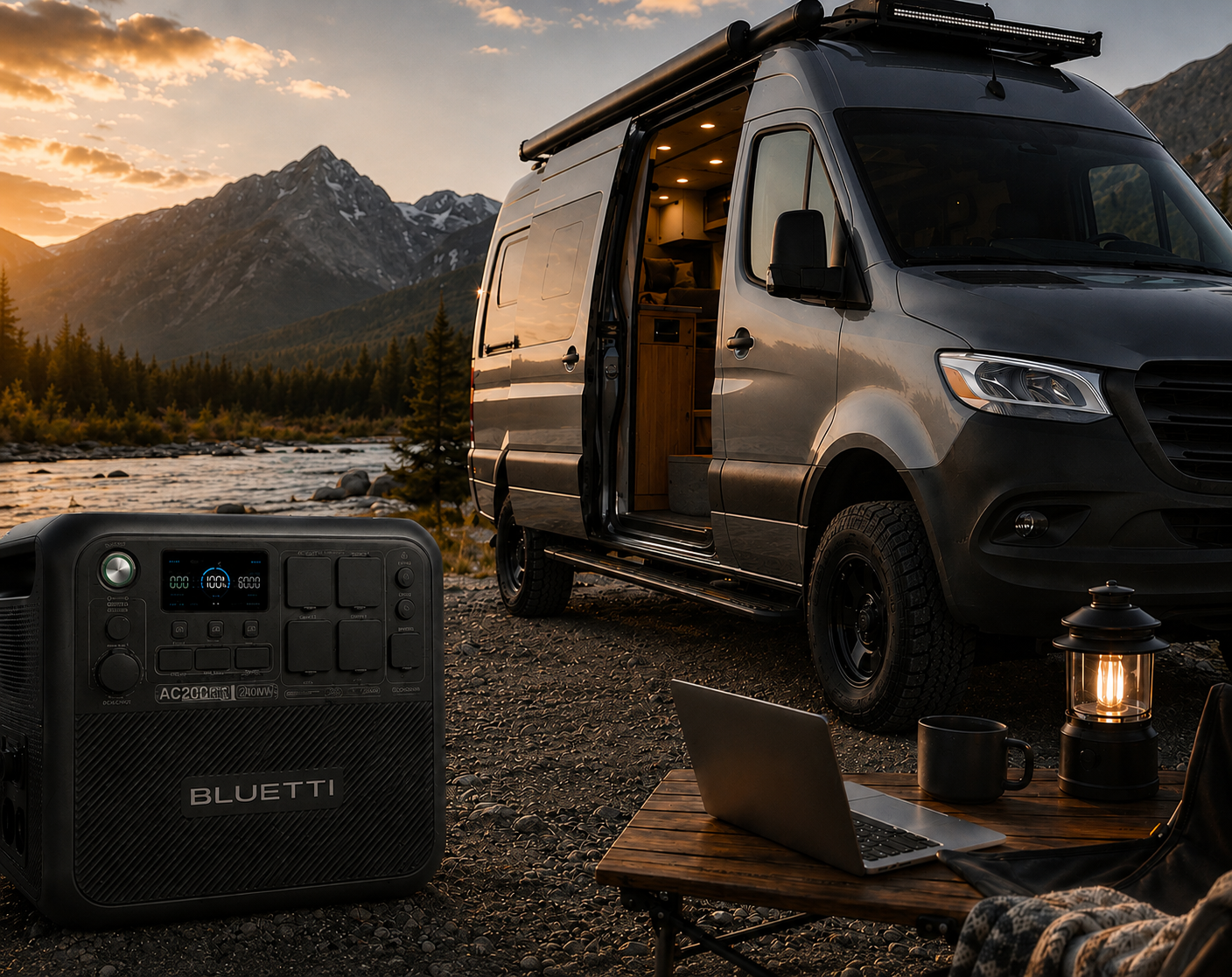
Portable power comparison
EcoFlow vs Bluetti: Which Portable Power Station Brand Is Best for UK Buyers?
EcoFlow and Bluetti have become two of the biggest names in portable power, with products ranging from compact batteries for camping and days out to large power stations capable of keeping essential household equipment running during a power cut.
But which should you buy?
There isn't one answer for everyone. EcoFlow and Bluetti now have extensive ranges, and the better choice depends on whether you want something lightweight, a versatile 1kWh power station, serious off grid capacity or emergency power for the home.
Updated September 2026
Independent Horizon Living comparison
EcoFlow vs Bluetti: the quick answer
For most buyers, choosing between EcoFlow and Bluetti should start with the size of power station you actually need rather than the badge on the front.
EcoFlow's current range includes highly portable RIVER models alongside the more powerful DELTA family. The DELTA 3 sits in the increasingly popular 1kWh class, combining 1,024Wh capacity with 1,800W AC output.
Bluetti covers a similarly broad spectrum. Its current Elite range stretches from the compact 288Wh Elite 30 V2 through the 1,024Wh Elite 100 V2 to the substantially larger 2,073.6Wh Elite 200 V2.
That gives both brands credible options, but for quite different jobs.
EcoFlow vs Bluetti at a glance
EcoFlow
Best considered if you want:
- Fast and flexible charging
- A strong range of compact and mid sized power stations
- A mature DELTA ecosystem
- Expandable capacity on selected models
- App based monitoring and control
- Portable power that can also provide short term emergency backup
Bluetti
Best considered if you want:
- A particularly broad choice of capacities
- Compact Elite models for travel and camping
- Powerful high capacity portable stations
- LiFePO4 based portable power options
- Strong choices for off grid and longer duration use
- A wide range spanning lightweight to serious backup power
Small portable power: RIVER 3 vs Elite 30 V2
At the smaller end of the market, EcoFlow RIVER 3 and Bluetti Elite 30 V2 target people who value portability more than enormous battery capacity.
The EcoFlow RIVER 3 provides 245Wh of capacity and 300W rated output.
The Bluetti Elite 30 V2 increases that to 288Wh and 600W.
These aren't products designed to run an entire house. Their strength is convenience.
Think phones, tablets, cameras, laptops, lighting, routers and smaller camping equipment.
They're much easier to carry than the larger 1kWh and 2kWh machines and can make far more sense if most of your trips only require modest amounts of electricity.
For camping, photography, working remotely or keeping communications equipment running during a short outage, this size of power station can be the sweet spot.
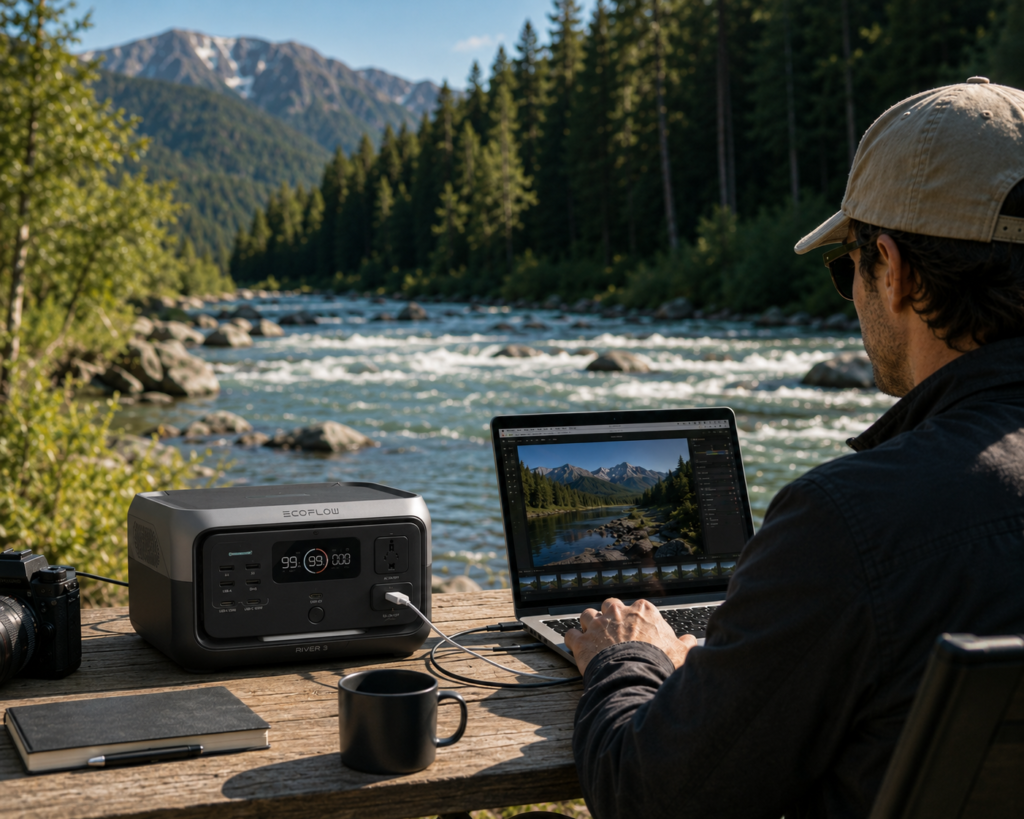
Best lightweight
EcoFlow RIVER 3
Easy to carry and pack, aimed at travel, festivals and short trips.
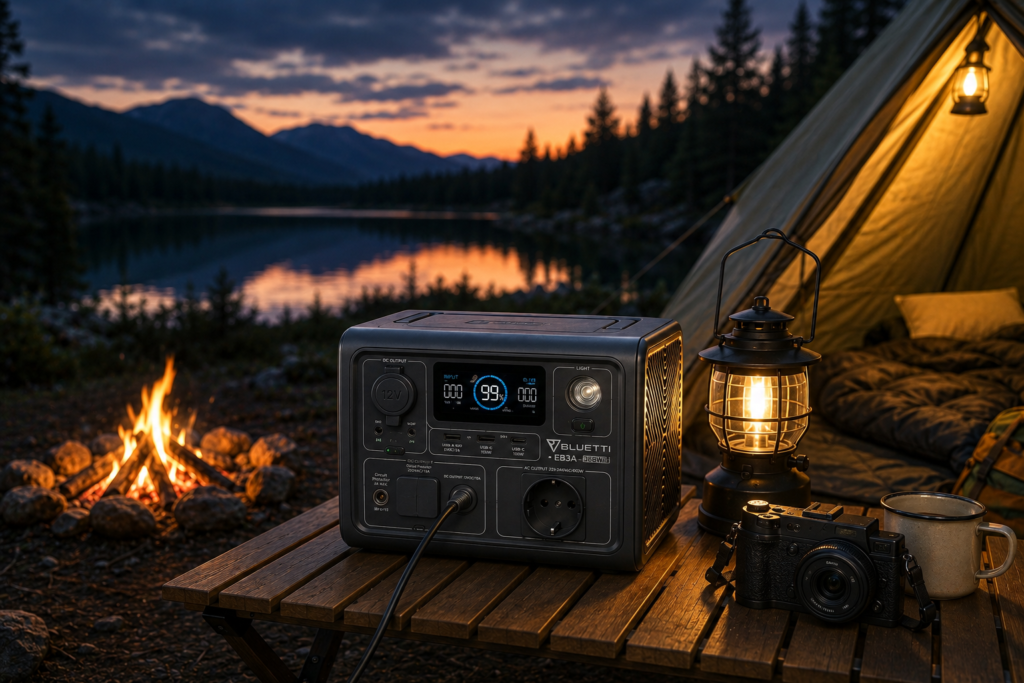
Best budget
BLUETTI Elite 30 V2
A compact entry point for phones, laptops and small devices without a large outlay.
The 1kWh sweet spot: DELTA 3 vs Elite 100 V2
This is where the comparison becomes particularly interesting.
EcoFlow DELTA 3 and Bluetti Elite 100 V2 both offer:
- 1,024Wh battery capacity
- 1,800W AC output
That combination makes the 1kWh category extremely versatile.
There's enough output for considerably more demanding equipment than the smallest portable stations, while the units remain practical enough to transport.
For many UK buyers, this is arguably the most useful class of portable power station.
A 1kWh machine can make sense for:
- Camping
- Campervans
- Remote working
- Photography and video equipment
- Outdoor events
- Power tools
- Emergency household power
- Keeping broadband and communications running
- Supporting refrigeration during shorter outages
The important question therefore becomes less about headline capacity and more about charging options, solar input, portability, connections, expansion and how you intend to use the system.
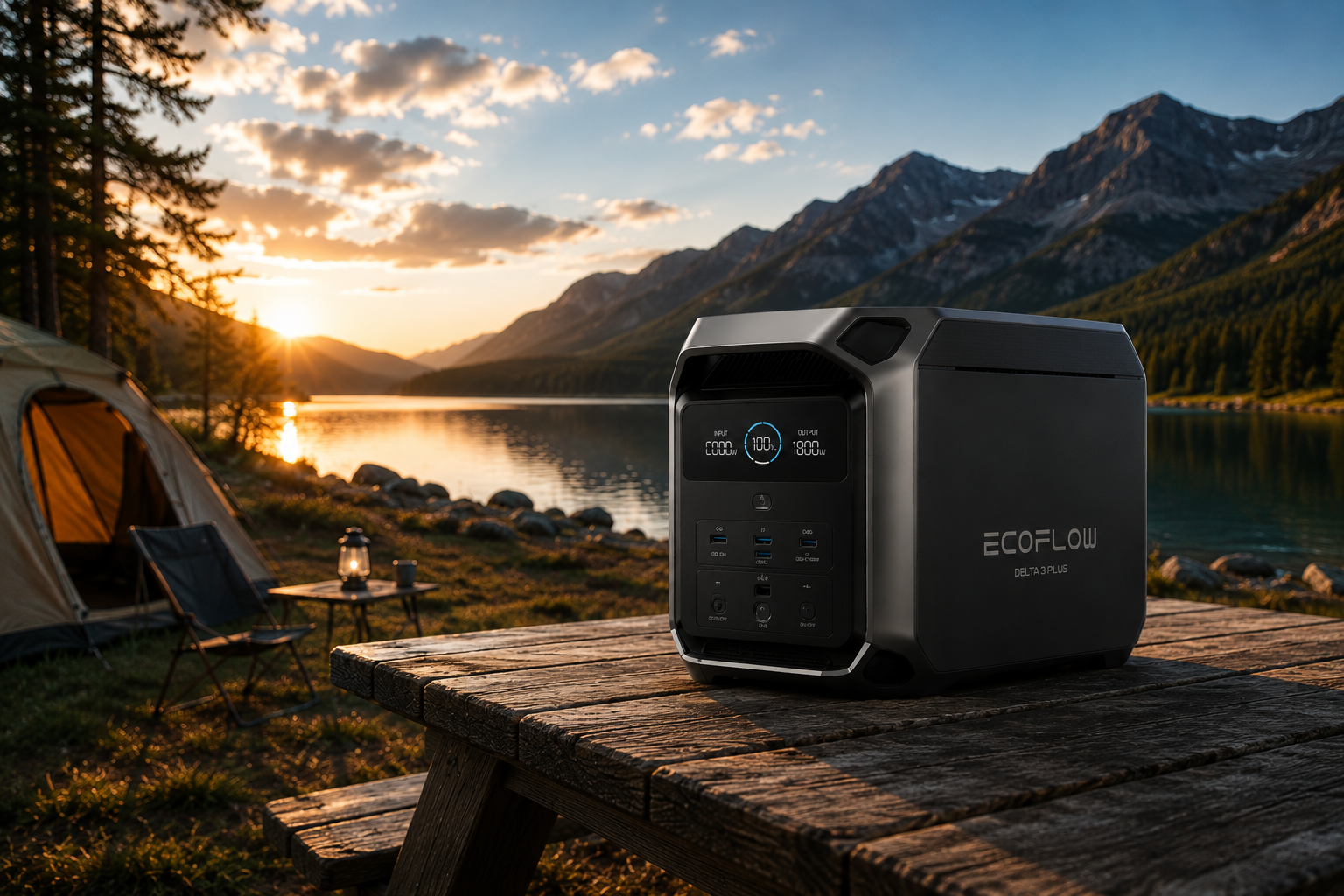
Best overall
EcoFlow DELTA 3
A balance of capacity, output and portability that suits most UK buyers, with fast mains charging and app control.
When you need substantially more power
Move beyond occasional camping and lightweight backup and battery capacity starts to matter much more.
Bluetti's Elite 200 V2 is a good example.
It provides 2,073.6Wh capacity with 2,600W AC output, putting it in a different category from the smaller Elite 30 V2 and 1kWh Elite 100 V2.
That extra stored energy becomes valuable when appliances need to run for longer or several devices need power simultaneously.
EcoFlow also offers larger DELTA models and expandable systems for buyers who need significantly more energy than a standard 1kWh portable station can provide.
At this level, don't simply buy the product with the biggest number.
Consider:
- What equipment will actually be connected
- Its continuous power consumption
- How long it needs to operate
- How quickly the battery can be recharged
- Whether solar charging matters
- Whether you need expandable capacity
- How frequently you'll have to move the unit
Also read our EcoFlow DELTA Pro 3 review.
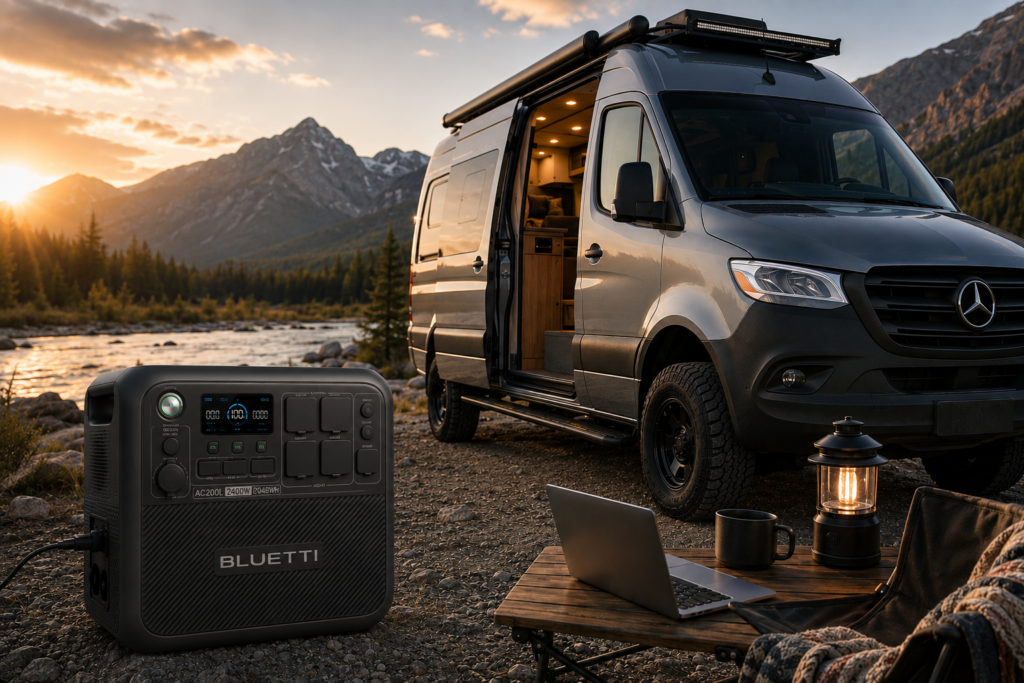
Best campervan
BLUETTI Elite 200 V2
Sensible capacity and output for van life, with quiet operation and solar charging support.
Charging speed matters more than you might think
Battery capacity gets most of the attention, but charging can make an enormous difference in everyday ownership.
A power station that can be replenished quickly from the mains is easier to use between trips and more useful when electricity availability is unpredictable.
Both EcoFlow and Bluetti provide multiple charging options across their current ranges, although the exact capabilities depend on the model.
Depending on the product, these can include:
- AC mains charging
- Solar charging
- Vehicle charging
- Combination charging methods
If you're mainly using a power station at home, fast AC charging may matter most.
For camping, campervans and extended off grid use, solar input and vehicle charging can become considerably more important.
Always compare the specifications of the exact model rather than assuming every power station from a brand supports the same charging rates.
EcoFlow vs Bluetti for solar charging
Both brands have invested heavily in portable solar ecosystems.
Solar can transform a portable power station from a battery that eventually runs flat into a system capable of replenishing energy while you're away from the grid.
But panel wattage alone doesn't tell the whole story.
Check:
- Maximum solar input supported by the power station
- Permitted voltage and current
- Connector compatibility
- Expected UK weather conditions
- Where and how the panels will be positioned
A large solar array isn't particularly useful if the power station can't accept its potential output.
Likewise, real UK solar production will vary with season, cloud cover, orientation and shading.
Which is better for camping?
For ordinary tent camping and weekend trips, we'd start at the smaller end of both ranges.
EcoFlow RIVER 3 and Bluetti Elite 30 V2 provide enough capacity for many low energy devices without forcing you to carry a large power station around.
If your camping setup includes refrigeration, cooking equipment, multiple devices or longer stays, stepping up towards a 1kWh model can make more sense.
The key is matching the battery to the trip.
Buying a huge power station for charging two phones is unnecessary.
Buying a tiny one and expecting it to run high powered equipment for days will be equally disappointing.
EcoFlow RIVER 3 reviewBluetti Elite 30 V2 reviewEcoFlow DELTA 3 review
Which is better for a campervan?
Campervan users often sit somewhere between camping and home backup.
Weight still matters, but so do capacity and recharging flexibility.
A 1kWh class machine can provide an attractive balance for many vans because it offers substantially more energy than a small camping battery without moving immediately into very large portable systems.
Think about your complete electrical load:
- Fridge
- Lighting
- Phones
- Laptops
- TV
- Water pumps
- Coffee equipment
- Cooking appliances
- Heating controls
- Other accessories
Then calculate the likely daily energy requirement rather than choosing purely on maximum AC output.
Solar and vehicle charging can also become much more important for extended trips.
Which is better for home backup?
Portable power stations can be extremely useful during a power cut, but it's important to understand what they are designed to do.
Smaller units are excellent for keeping essential low power equipment alive.
That might include:
- Broadband router
- Phones
- Laptop
- Lighting
- Small electronics
Move into the 1kWh and 2kWh categories and it becomes practical to support considerably more demanding equipment for useful periods.
Large portable stations can potentially support refrigeration and other household appliances, subject to the appliance's starting load, continuous consumption and the power station's output limits.
However, a portable power station should not automatically be treated as a substitute for a professionally designed whole home battery installation.
If your objective is automatic long duration backup for a large proportion of your house, investigate dedicated home battery systems as well.
Battery lifespan
Modern portable power stations increasingly use lithium iron phosphate, usually written as LiFePO4 or LFP, battery chemistry.
LFP has become popular partly because of its long cycle life.
However, don't compare products using chemistry alone.
Look at the manufacturer's stated cycle life for the exact model, what remaining capacity that cycle figure refers to, warranty terms and how you expect to use the battery.
Someone using a power station every day has very different requirements from someone taking one camping six weekends a year.
Apps and everyday usability
The smartphone app is easy to overlook when comparing specifications.
In practice, it can become one of the parts of a power station you interact with most frequently.
Depending on the model and software, app controls may allow you to monitor:
- Battery percentage
- Input power
- Output power
- Charging behaviour
- Power limits
- Operating modes
- Firmware updates
EcoFlow and Bluetti both provide connected functionality across relevant products in their current ranges.
Again, check the exact model because features aren't necessarily identical across an entire brand.
EcoFlow or Bluetti: which should you choose?
Rather than declaring one brand universally better, we'd choose according to the job.
For lightweight portable power
Start by comparing:
- EcoFlow RIVER 3
- Bluetti Elite 30 V2
Both are designed around portability rather than enormous energy storage.
For around 1kWh
Compare:
- EcoFlow DELTA 3
- Bluetti Elite 100 V2
Both combine 1,024Wh capacity with 1,800W output, making this one of the most interesting head to head comparisons in the current ranges.
For higher capacity
Look beyond the 1kWh category.
Bluetti Elite 200 V2 offers more than 2kWh of stored energy and 2,600W output.
EcoFlow's larger DELTA family provides alternative routes into high capacity and expandable portable power.
For camping
Prioritise portability, realistic energy requirements and charging options.
Small RIVER and Elite models will often make more sense than transporting a huge battery you don't need.
For campervans
The 1kWh category is particularly interesting, but calculate your daily consumption first.
Vehicle and solar charging capability should form part of the buying decision.
For home backup
Capacity and output become increasingly important.
Work out which appliances are genuinely essential and how long you want them to operate before choosing the battery.
Our EcoFlow and Bluetti reviews
Best overall
EcoFlow DELTA 3
A balance of capacity, output and portability that suits most UK buyers, with fast mains charging and app control.
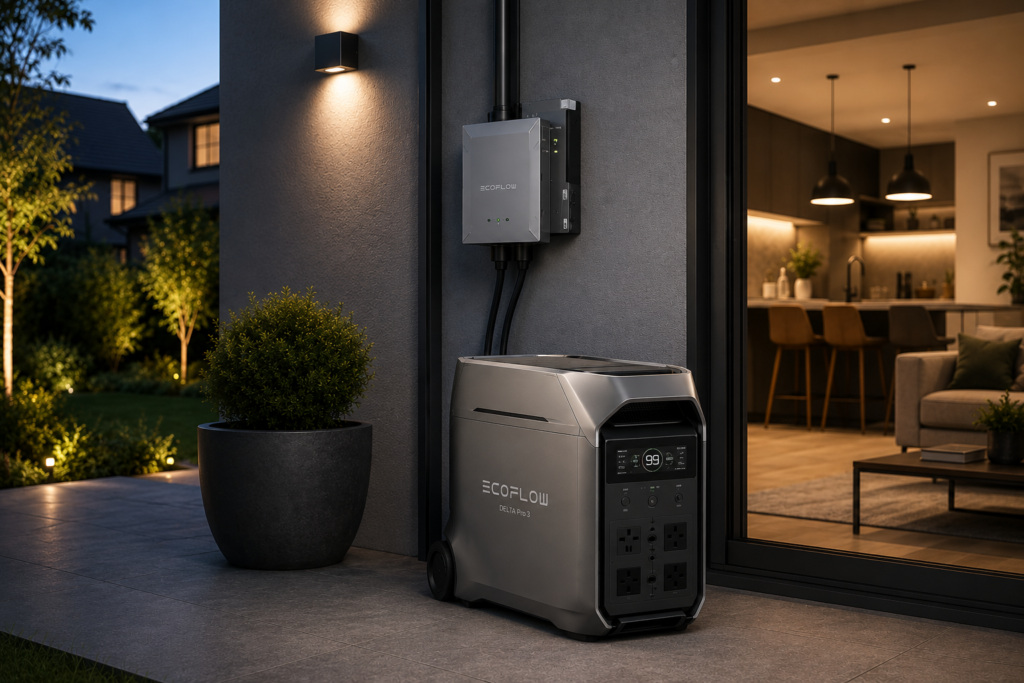
Best home backup
EcoFlow DELTA Pro 3
Higher output and expandable capacity for running larger household loads during an outage.
Best lightweight
EcoFlow RIVER 3
Easy to carry and pack, aimed at travel, festivals and short trips.
Best budget
BLUETTI Elite 30 V2
A compact entry point for phones, laptops and small devices without a large outlay.
Best campervan
BLUETTI Elite 200 V2
Sensible capacity and output for van life, with quiet operation and solar charging support.
Frequently asked questions
Is Bluetti better than EcoFlow?
Neither brand is automatically better for every buyer. Compare the models that fit your required capacity, output and use case. A lightweight camping battery and a 2kWh home backup system solve very different problems.
Is EcoFlow better than Bluetti?
EcoFlow has a broad RIVER and DELTA ecosystem covering lightweight through high capacity portable power. Bluetti also has an extensive range, including its current Elite products. The better choice depends on the individual models rather than the brand name alone.
Which lasts longer, EcoFlow or Bluetti?
Battery longevity varies by model. Compare battery chemistry, the manufacturer's specified cycle life, warranty and the remaining capacity associated with the quoted cycle figure.
Which is better for camping?
Smaller models such as EcoFlow RIVER 3 and Bluetti Elite 30 V2 are particularly relevant when portability matters. Larger models become worthwhile when your equipment requires significantly more energy.
Which is better for home backup?
Higher capacity models are generally more suitable when you need to run household appliances for longer periods. Calculate the power consumption and starting requirements of the equipment you want to support before buying.
Can EcoFlow and Bluetti use solar panels?
Both manufacturers offer power stations capable of solar charging. Compatibility, maximum solar input and electrical limits vary by model, so check the specifications before connecting third party panels.
Do EcoFlow and Bluetti use LiFePO4 batteries?
Many current models use LiFePO4 battery chemistry, but check the specification of the particular product you're considering rather than assuming every model uses the same cells.
Which is better for a campervan?
A 1kWh class model can offer a useful compromise between portability and capacity for many campervans. The correct size depends on your fridge, electronics, cooking equipment and other electrical loads.
Compare more portable power stations
Not decided yet?
Visit our Best Portable Power Stations UK guide to compare our current recommended models.
Best Portable Power Stations UK